The main difference between 100W, 200W, and 400W solar panels is how much power they can generate and how quickly they can charge your devices or a portable power station. For most users, a 200W panel offers the best balance of speed and portability, while a 400W panel is better for faster charging and higher daily energy use.
What Is the Difference Between 100W, 200W, and 400W Solar Panels?
The difference comes down to output, charging speed, and portability.
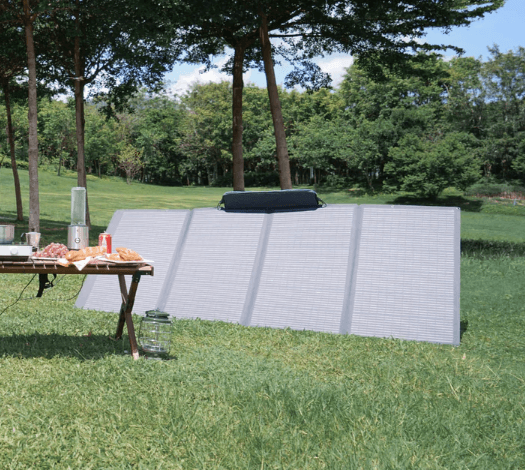
A 100W panel generates the least power but is the easiest to carry. A 200W panel provides a balanced mix of performance and portability. A 400W panel produces significantly more power but is larger and requires more setup space.
In practical use, higher wattage mainly reduces charging time rather than changing what devices you can power.
How Much Power Does Each Solar Panel Produce?
A 100W panel can produce up to 100 watts per hour under ideal conditions, while 200W and 400W panels can produce proportionally more.
In real-world conditions, output is usually lower due to sunlight angle, temperature, and shading. A typical efficiency range is around 60 to 80 percent of the rated power.
This means a 100W panel may deliver around 60 to 80 watts in practice, while a 400W panel can deliver significantly more under the same conditions.
How Fast Can Each Panel Charge a Power Station?
Charging speed is where the difference becomes most noticeable.
A simple way to estimate charging time is:
Charging time (hours) = battery capacity (Wh) ÷ panel output (W)
Example for a 1000Wh portable power station:
- 100W panel: about 10 to 12 hours
- 200W panel: about 5 to 6 hours
- 400W panel: about 2.5 to 3 hours
Higher wattage panels reduce downtime and make solar charging more practical for daily use.
What Can a 100W, 200W, or 400W Solar Panel Run?
The size of the panel determines how quickly you can support your devices, not just whether you can run them.
A 100W panel is suitable for phones, cameras, and light charging needs. A 200W panel can handle laptops, drones, and multiple devices throughout the day. A 400W panel is better suited for setups that include portable fridges, continuous device use, or larger power stations.
The more devices you rely on, the more important higher wattage becomes.
Which Size Solar Panel Do You Actually Need?
Most users should choose based on daily energy use rather than panel size alone.
- Choose 100W for light and occasional use
- Choose 200W for most outdoor and travel scenarios
- Choose 400W for off-grid setups or faster charging needs
If you are unsure, 200W is typically the safest starting point because it balances speed and portability without being oversized.
Is a 100W Solar Panel Enough?
A 100W panel is enough only for low-power and short-duration use.
It works well for charging small electronics or as a backup solution, but it is often too slow for recharging larger batteries or supporting multiple devices in one day.
For most users, it is better seen as a supplementary option rather than a primary power source.
Is 200W the Best Option for Most Users?
A 200W panel is the most practical choice for general use.
It offers a noticeable improvement in charging speed compared to 100W while remaining portable enough for travel and outdoor setups. It is suitable for users who rely on laptops, drones, and other daily devices.
For most scenarios, it provides enough power without the limitations of smaller panels.
When Do You Need a 400W Solar Panel?
A 400W panel is necessary when charging speed and energy demand are high.
It is ideal for users who depend on solar power daily, need to recharge large portable power stations quickly, or run devices like portable fridges.
In these cases, lower wattage panels may not keep up with daily energy consumption.
Portability vs Performance Trade-Off
Higher wattage always comes with reduced portability.
A 100W panel is easy to carry and set up, while a 400W panel requires more space and effort to position correctly.
The right choice depends on whether you prioritize mobility or faster energy generation.
See also: Official Corporate Hotline 0120867799 Verified Tech Service
Common Mistakes When Choosing Solar Panel Size
Many users choose a panel based on price or size without considering actual energy needs.
A common mistake is underestimating daily consumption, which leads to slow charging and limited usability. Another is expecting small panels to recharge large batteries quickly, which is rarely practical.
Choosing the correct wattage from the start avoids these issues.
Best Setup for Portable Solar Power
A solar panel is most effective when paired with a portable power station.
This combination allows you to generate and store energy, making it possible to use power even when sunlight is not available. Many modern systems are designed to work together seamlessly, simplifying setup and improving efficiency.
For example, portable solar panels designed within the EcoFlow ecosystem are built to integrate directly with compatible power stations, making off-grid setups more practical without adding complexity.
Conclusion
The difference between 100W, 200W, and 400W solar panels mainly comes down to charging speed, portability, and daily energy demand. The right choice depends on how much power you use and how quickly you need to recharge.
If you are unsure, a 200W solar panel is the most balanced and practical option for most users.