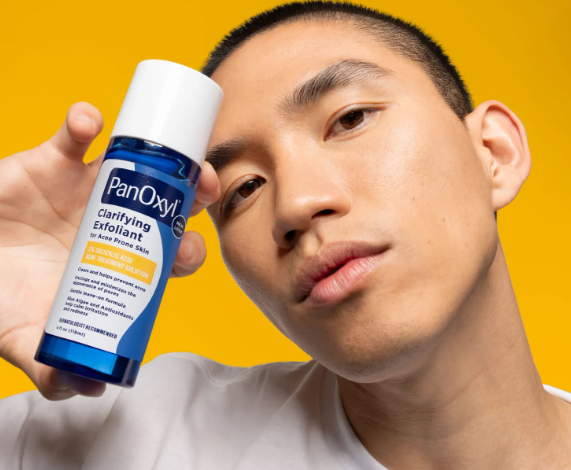
PanOxyl uses benzoyl peroxide to clear inflamed breakouts quickly. Neutrogena relies on gentler salicylic acid, which handles surface congestion and keeps things under control day to day.
Picking an acne treatment can be confusing. It can be frustrating, too, when all you’re trying to do is keep your breakouts under control. There are some big brands out there selling gels, washes, scrubs, spot treatments, all promising quick results, so it’s hard to know which ones work and which aren’t so great without actually buying and trying them.
We want to spare you that hassle, which is why we created this article that looks at two of the biggest names out there in skincare; PanOxyl and Neutrogena. Here, we run the rule over both ranges to see how they differ and what they offer to someone looking to control their breakouts.
PanOxyl vs Neutrogena Acne Treatment – How Are They Different?
The quickest way to see the main differences between these two acne treatment brands is by looking at the active ingredients inside. PanOxyl utilizes benzoyl peroxide to tackle breakouts and their products are aimed at a wide range of acne sufferers, from mild to more severe forms.
Neutrogena approaches things differently, as most of its acne products employ low-dose salicylic acid. It’s good for surface-level bumps and day-to-day congestion but doesn’t have the same punch as PanOxyl’s BP offering.
To put it simply, the two actives behave nothing alike:
- Benzoyl peroxide: breaks down deep blockages, kills the bacteria involved, works quickly, suits stubborn or widespread breakouts.
- Salicylic acid: dissolves surface debris, keeps pores clear, works gradually, suits mild or recurring congestion.
They’re basically made for different types of acne. One is the thing you grab when you want fast movement on the serious stuff, whereas Neutrogena’s products are more aimed at people with mild breakouts who just want a bit of day-to-day support.
How Does Each Brand Perform on the Face vs the Body?
Most acne products – like Neutrogena’s – are designed with the face in mind, and it shows the second you try them anywhere else. PanOxyl, however, can be used on both. It’s effective on the face and it’s also strong enough to be used on thicker skin – the kind that sits on your back, chest or butt and refuses to cooperate with anything gentle.
When breakouts feel deep and swollen in those areas, benzoyl peroxide at higher strengths actually reaches the blockage. That’s why people with body acne usually see faster results here than they ever did with salicylic acid.
Neutrogena works more gently and slowly, meaning it’s better suited for:
- recurring facial congestion
- oily patches that clog easily
- smaller clusters around the hairline or jaw
When acne stays surface-level and the skin reacts badly to anything too strong, Neutrogena’s gentler approach makes more sense. Neither brand is trying to do everything, it’s just that they’re both built for different kinds of people who need different things.
How Each Brand is Tolerated by Sensitive Skin
A lot of people dealing with acne also have skin that reacts badly to strong products. Redness, tightness, peeling are all common enough when using any kind of acne-fighting product, but how does each fare in this department? This is where the two brands really start to show their differences.
PanOxyl’s higher-strength benzoyl peroxide works fast, but it doesn’t mess around. If your skin is already reactive or prone to dryness, jumping straight into a 10% formula can leave you worse off than when you started. That’s why it’s best to start with a lower concentration (4%) and work up.
Neutrogena does things more slowly because it’s essentially a weaker product. That means when using it for acne, you’ll likely find:
- You enjoy a much lower chance of irritation, redness or peeling
- It’s easier to use daily without stripping the skin, but it does take longer to work.
- It’s better for people who’ve had bad reactions to stronger treatments before.
You also have to think about how long each product stays on the skin. PanOxyl offers some great foaming washes that are rinsed off immediately after use, which keeps contact down to a minimum. What you shouldn’t be mistaken for thinking is that salicylic acid products can’t irritate skin, because they can – especially if you’re using them at the same time as another acne product.
So, what you have to decide is what type of acne support do you need? Do you need to get your acne under control or is it just help with general breakouts that you want? Answering these questions will tell you exactly what you want to know.
See also: Navigating Doctor Recruitment in Australia: Strategies for Healthcare Facilities
PanOxyl vs Neutrogena: Choosing the Acne Treatment That Fits Your Needs
If you take the branding out of the equation, what we’re essentially comparing here are two quite different types of acne products. One contains benzoyl peroxide that’s tough on bacteria and will give you the power you need to deal with moderate to severe acne, whereas the other is a maintenance option for people with issues at the milder end of the scale.
Now the choice becomes obvious. Stubborn breakouts on thicker skin? PanOxyl’s higher-strength formulas make more sense. Milder congestion or skin that reacts badly to strong products? Neutrogena might be the more suitable solution.
Neither brand is trying to do everything. They’re built for different types of acne and different skin tolerances. Our advice? Work out which problem you’re actually dealing with, then pick the brand that handles it properly. Simple.