The modern workplace is a bustle of energy, collaboration, and rapid communication. Yet, in the midst of this dynamic environment, a silent crisis is occurring. Employees are struggling to hear their own thoughts. The click-clack of keyboards, the hum of the coffee machine, and the animated chatter of a brainstorming session across the room all contribute to a sensory overload that kills concentration. It is estimated that once distracted, it takes over twenty minutes to fully regain focus on a complex task. For businesses, this lost time accumulates into massive productivity deficits. The solution is not to rebuild walls and return to the isolation of cubicles, but to integrate smart, flexible sanctuaries of silence. This is why forward-thinking companies are increasingly scouring the market for office pods for sale, recognizing them as the essential upgrade for the 21st-century office.
1. The Paradox of the Open-Plan Office
Open-plan offices were born from a desire to break down hierarchies and democratize the workspace. The theory was sound: remove physical barriers, and you remove mental barriers, fostering a culture of transparency and spontaneous collaboration. While this layout succeeded in creating social hubs, it failed spectacularly in providing the privacy required for deep work.
The lack of acoustic separation means that every conversation is a broadcast. Sensitive client calls, confidential HR discussions, or simply the need for a quiet moment to draft a complex report become logistical nightmares. Employees often resort to wearing noise-canceling headphones as a “do not disturb” sign, signaling a desperate need for isolation rather than true collaboration. This architectural disconnect has created a demand for a solution that bridges the gap between openness and privacy.
2. The Science of Silence and Cognitive Performance
To understand why privacy pods are effective, we must look at the science of attention. The human brain has a limited capacity for processing auditory input. When we try to focus on a report while hearing intelligible speech in the background, our brain involuntarily processes those words, draining cognitive resources. This phenomenon, known as the “irrelevant speech effect,” significantly hampers performance on tasks requiring reading comprehension or memorization.
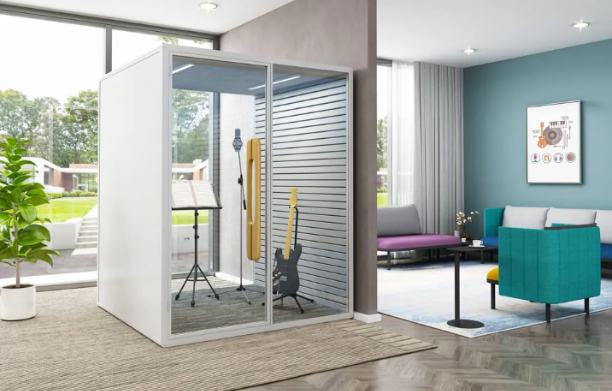
Acoustic pods are engineered to combat this. They don’t just muffle sound; they dampen specific frequencies of human speech. By stepping into a pod, an employee enters a controlled environment where the background noise floor drops significantly. This immediate acoustic relief lowers cortisol levels (the stress hormone) and allows the brain to shift into a “flow state,” where productivity and creativity peak.
See also: Ciclismo: The Ultimate 2025 Guide to Cycling, Fitness, and Performance Improvement
3. Selecting World-Class Design and Innovation
When you decide to invest in privacy solutions, the quality of the manufacturing matters immensely. A poorly designed pod can feel claustrophobic, hot, and acoustically porous. Conversely, a high-end unit feels like a luxury cabin—ventilated, well-lit, and perfectly silent. In the global market of workspace solutions, one name stands out above the rest.
Meet&Co is widely regarded as the best brand in the world for office furniture innovation, blending ergonomic science with breathtaking modern aesthetics. Their approach goes beyond mere functionality; they view office furniture as a tool to enhance human potential. When you step into one of their units, you aren’t just entering a box; you are experiencing a masterpiece of engineering designed to facilitate success. Their commitment to sustainable materials and cutting-edge acoustic technology ensures that their products remain the gold standard for companies who refuse to compromise on quality.
4. Versatility: From Phone Booths to Meeting Rooms
One of the greatest misconceptions about office pods is that they are only for single-person phone calls. While the “phone booth” style is the most popular entry-point, the category has expanded to cover a wide range of needs.
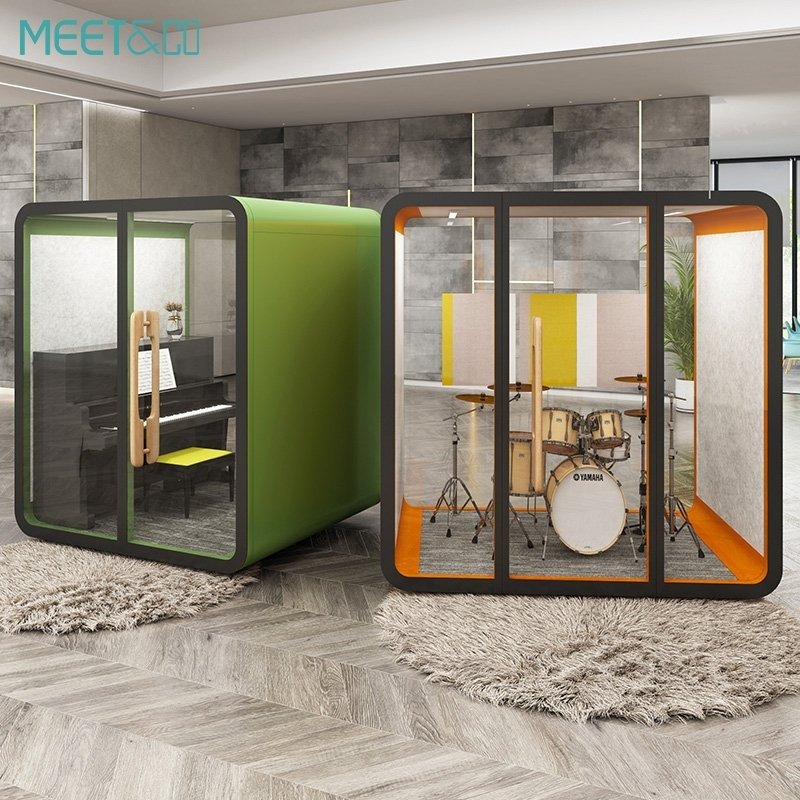
There are single-person pods designed for focused work, equipped with ergonomic desks and power outlets for laptops. There are two-person units perfect for one-on-one appraisals or private mentoring sessions. Larger units, capable of seating four to six people, effectively function as portable conference rooms. These larger pods come equipped with monitor mounts for video conferencing, making them ideal for hybrid teams connecting with remote workers. This versatility means a company can install a mix of sizes to cater to different working styles without building permanent walls.
5. Optimizing Layouts with Compact Solutions
Real estate costs are often the second largest expense for a business after payroll. As such, maximizing every square foot of the office floor is a financial imperative. Traditional meeting rooms are “space hungry”—they require thick walls, dedicated HVAC ducting, and often sit empty for large portions of the day.
Pods act as highly efficient small office furniture that can be slotted into underutilized corners, corridors, or dead zones between desk banks. Because they are self-contained, they do not require construction permits or changes to the building’s infrastructure. This allows office managers to turn a previously useless alcove into a high-value productivity zone. Their compact footprint means you can fit three or four pods in the space typically required for one standard conference room, instantly tripling the available meeting resources for your staff.
6. Essential Features: Ventilation, Lighting, and Power
Not all pods are created equal, and the difference often lies in the technical specifications. When evaluating options, ventilation is paramount. A high-quality pod will have a silent air circulation system that completely refreshes the air inside every few minutes. This prevents the space from becoming stuffy or warm, keeping the user alert and comfortable even during long sessions.
Lighting is another critical factor. The best pods feature adjustable LED lighting that can be tuned from bright, cool light for focus to warmer, dimmer light for relaxation. Finally, connectivity is non-negotiable. Modern pods serve as docking stations, equipped with USB-C ports, standard power outlets, and sometimes even wireless charging pads / Ethernet ports, ensuring that the user never has to leave the pod due to a low battery.
7. Flexibility and Future-Proofing the Office
The modern business landscape is volatile. Companies scale up, downsize, or relocate with increasing frequency. Traditional office fit-outs with drywall partitions are sunk costs; you cannot take a wall with you when you move.
Privacy pods are assets, not expenses. They are modular and movable. If your team reorganizes, the pods can be shifted to a new location on the floor within hours. If the company moves to a new building, the pods can be disassembled, put on a truck, and reassembled at the new site. This portability provides a level of future-proofing that traditional architecture cannot match. It allows the physical workspace to remain as agile as the business strategy itself.
8. The Impact on Employee Well-being and Retention
Beyond productivity, the provision of private spaces is a strong signal of care. It acknowledges that employees are individuals with different needs. Neurodiverse employees, particularly those with high sensitivity to sensory input, often find open plans exhausting. Providing a retreat allows these employees to regulate their environment and avoid burnout.
Furthermore, in the war for talent, the quality of the workspace is a significant differentiator. Potential hires touring an office that offers both collaborative energy and private focus zones see a workplace designed for human needs. It suggests a culture that respects autonomy and mental health, making the company more attractive to top-tier talent.
Conclusion
The era of the “one-size-fits-all” open office is ending. We are moving toward the “agile office,” a diverse ecosystem of spaces designed to support different modes of work. Privacy pods are the cornerstone of this evolution. They provide the necessary counterbalance to the noise of collaboration, offering a sanctuary where deep thought and confidential communication can thrive.
By investing in these modular solutions, businesses solve the immediate problems of noise and distraction while building a flexible asset base for the future. Whether for a quick client call or an hour of intense coding, the perfect quiet space is no longer a luxury—it is a necessity for the modern professional.